
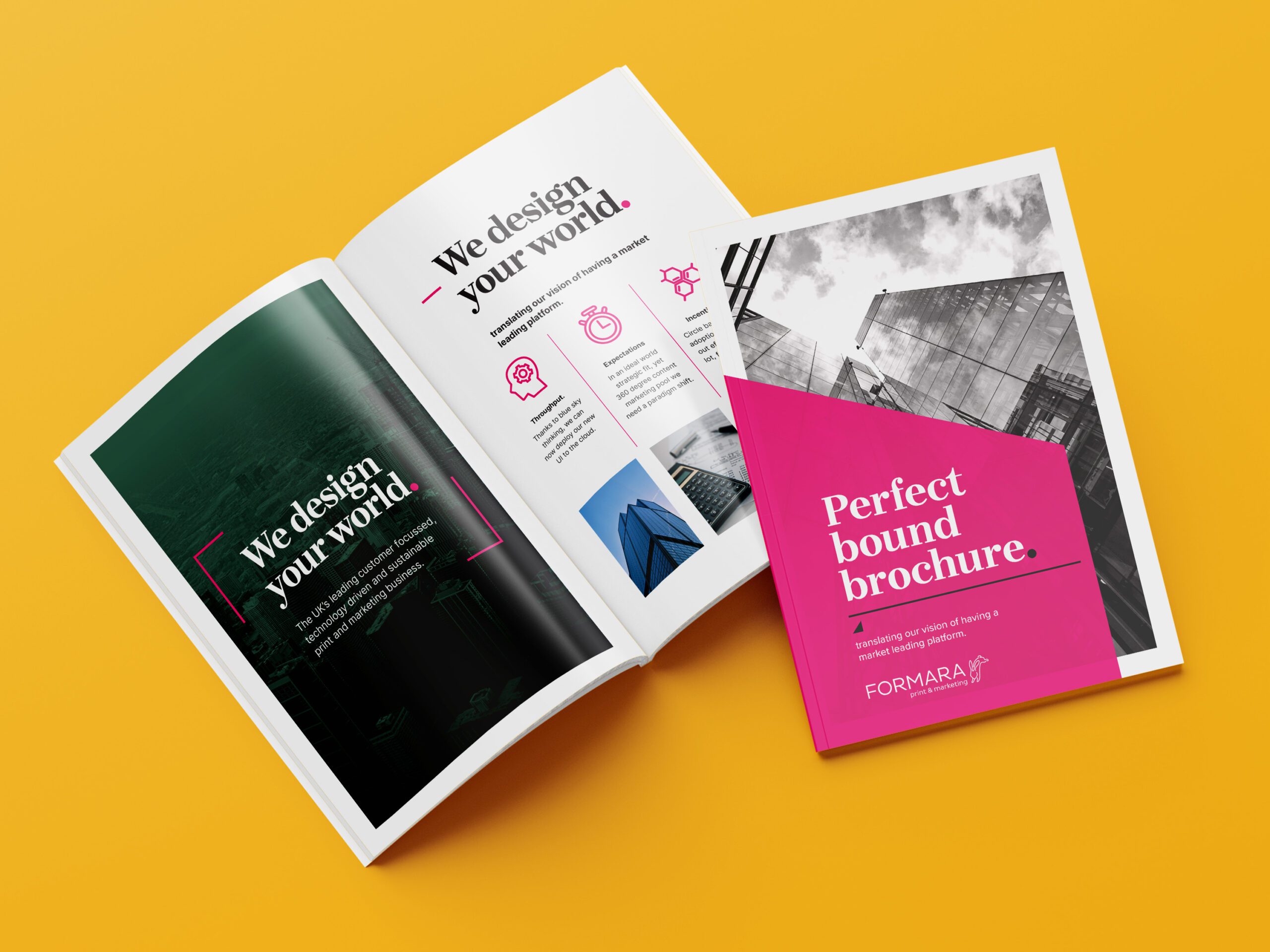
In a world dominated by screens, dashboards, and digital-first strategies, brochures are often treated as outdated, optional, or expendable. Many organisations quietly phased them out, assuming websites, PDFs, and slide decks would do the same job faster and cheaper.
Yet brochures have not disappeared. In fact, among serious brands, considered purchases, and high-trust sectors, they have become more deliberate, more strategic, and more valuable than ever.
The role of the brochure has changed, but its relevance has not.
This article explores why brochures still matter, how they function today, and why organisations that understand their value use them with intent rather than nostalgia.
Brochures as a Trust-Building Asset in a Digital-First World
Digital is efficient, measurable, and immediate. Trust, however, is built more slowly.
A well-produced brochure carries weight. It signals permanence, credibility, and confidence in a way few digital assets can replicate. Unlike a webpage that can change overnight or disappear behind an algorithm, a brochure is fixed, deliberate, and tangible.
In high-value or considered decisions, trust is rarely formed in a single click. A brochure becomes a physical anchor for belief. It reassures stakeholders that the organisation has invested time, thought, and care into its message.
When screens fail, print persuades, not because it shouts louder, but because it feels more real.
This is particularly important in sectors where reputation, stability, and credibility matter more than novelty.
Brochures as a Sales Tool, Not a Marketing Afterthought
One of the most common mistakes organisations make is treating brochures as brand decoration rather than a sales instrument. Research shows that why brochures can significantly increase consumers’ buying decisions comes down to trust, tangibility and the way people process physical information.
A strong brochure supports conversations. It helps sales teams explain, reinforce, and revisit key messages. It fills gaps left by verbal explanations and shortens decision cycles by answering questions before they are asked.
Sales-focused brochures:
- Structure complex discussions
- Support procurement and compliance checks
- Reinforce value after meetings
- Reduce reliance on follow-up emails and calls
The best brochures do not sit on desks. They move deals forward.
When designed with the sales journey in mind, a brochure becomes a deal-closer rather than a leave-behind.
Brochures in Complex or High-Value Buying Decisions
Not all decisions are made quickly, and not all information belongs on a website.
In finance, healthcare, education, property, and B2B services, buying decisions are often shared, scrutinised, and revisited over time. Stakeholders need clarity, consistency, and reassurance.
Brochures excel in this environment because they:
- Explain complexity in a linear, controlled way
- Ensure everyone sees the same information
- Reduce misinterpretation and message drift
- Travel easily between decision-makers
A website invites exploration. A brochure guides understanding which backs up why brochures still matter in buying decisions.
When the stakes are high and the decision is considered, brochures quietly become indispensable.
Brand Consistency and Control in a Noisy Market
Digital platforms promise reach, but they dilute control.
Algorithms decide visibility. Interfaces change. Ads appear next to content you did not choose. Messaging fragments across channels and formats.
A brochure is one of the last fully controlled brand assets.
Every element, from sequencing and tone to imagery and materials, is intentional. Nothing competes for attention. Nothing interrupts the experience.
In crowded markets, consistency builds confidence. Brochures allow brands to present themselves exactly as intended, without compromise, and that is why brochures still matter.
What brochures do that algorithms never will is protect the integrity of the message.
Sustainability, Longevity and Responsible Print
The sustainability debate around print is often framed incorrectly.
The real question is not digital versus print. It is disposable versus durable.
Thoughtfully designed brochures are kept, reused, shared, and valued. They live on desks, in meeting rooms, and in decision folders. They are referenced months after they are produced.
Responsible print focuses on:
- Fewer, better-produced pieces
- Purpose-led distribution
- Sustainable materials and processes
- Long-term usefulness rather than short-term reach
A brochure that is read, retained, and revisited is not wasteful. It is efficient.
Longevity is one of the most overlooked sustainability metrics in modern marketing.
Brochures Still Matter as Part of an Integrated Campaign
Modern brochures do not exist in isolation.
They connect seamlessly with digital through QR codes, personalised URLs, variable content, and data-driven follow-ups. They reinforce digital campaigns by giving them physical presence and memory.
Integrated brochures can:
- Drive traffic to specific landing pages
- Support personalised journeys
- Trigger digital actions from physical touchpoints
- Strengthen recall across channels
Print slows people down just enough for digital to work better.
Brochures still matter when they are planned as part of an integrated strategy, they amplify everything around them rather than compete with it.
The Cost of Cutting Brochures Too Quickly
Many organisations removed brochures without replacing what they actually did.
They removed structure, reassurance, and physical reinforcement, then wondered why conversations felt harder, sales cycles lengthened, or trust took longer to build.
The cost is rarely obvious, but it shows up in:
- Longer decision timelines
- Increased follow-up communication
- Greater reliance on sales explanation
- Reduced clarity across stakeholders
Digital can replace distribution. It cannot always replace impact.
Cutting brochures without understanding their role often creates invisible friction that organisations mistake for market conditions rather than marketing gaps.
Brochures as a Signal of Serious Intent
Finally, brochures send a signal.
They say this organisation is prepared. It has thought through its proposition. It is confident enough to commit its message to print.
In competitive environments, that signal matters.
A brochure communicates seriousness, professionalism, and investment before a single word is read. Customers notice, even if they cannot articulate why.
Print is a commitment, and commitment builds confidence.
Closing thought
Lastly, why brochures still matter is because brochures are not relics of the past. They are strategic assets when used with intent.
In an age of endless digital noise, the brands that stand out are often the ones willing to slow down, clarify their message, and put it into a form that lasts.
The question is no longer whether brochures still work.
It is whether businesses truly understand what they are giving up when they let them go.
Key takeaways
- Brochures build trust in ways digital alone cannot
- They support sales conversations, not just brand awareness
- Complexity needs clarity, and print delivers it consistently
- Brochures give brands control in an increasingly noisy landscape
- Sustainable print is about longevity, not volume
- The strongest campaigns connect print and digital
- Cutting brochures too quickly often creates hidden costs
- A brochure signals seriousness, intent, and confidence